
Singing that is not performance
Kirtan is call and response chanting from the Indian bhakti traditions. One voice sings a line, the room sings it back, and the whole thing repeats and gathers until an hour has gone and nobody noticed.
There is no audience. There is nothing to learn beforehand, no language to understand, and no requirement to sing well. The room carries any voice that joins it.
The bhakti poets who shaped this music — Mira Bai singing to Krishna, Kabir refusing every category, the Sufi singers of the same centuries — were not trained musicians presenting work. They were people in love, using the only instrument they had.
What an evening feels like
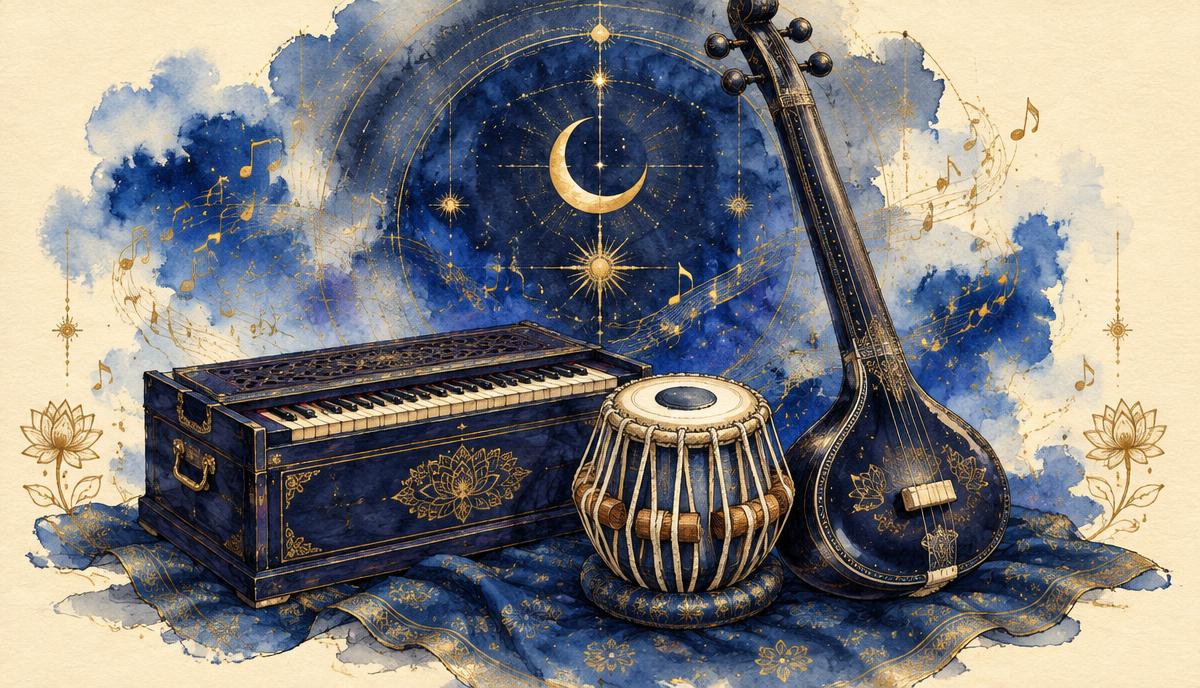
Harmonium, tabla, sometimes a stringed drone. A leader begins slowly, almost conversationally. The room answers. Tempo rises across fifteen or twenty minutes until a mantra that started as a polite murmur becomes something with real force, then drops into silence.
Many people find their first kirtan uncomfortable for ten minutes and then unexpectedly moving. Singing with other people is an old form of medicine.
I am neither in the temple nor in the mosque. If you are a true seeker, you shall find me at once.
Sacred music in Boston
Kirtan and sacred music in greater Boston happen in yoga studios, homes, Unitarian halls and university spaces across Cambridge, Somerville, Brookline and Jamaica Plain. Sufi zikr circles, Sanskrit chanting, Hebrew niggunim and gospel-rooted singing all live here too, usually on weeknights and Sunday evenings.
Our weekly guide gathers what is singing this week. Our Rumi evenings and Saraswati Flying Carpet project bring live raga, poetry and chant into the same room.
Arriving for the first time
- Sit near the middle — the sound is best there and you can hear the response.
- Sing quietly at first if you want; nobody can hear you individually.
- Stay for the silence at the end. It is part of the music.