
1931–1990
Osho
Indian · Contemporary mysticism · Contemporary
A controversial and electrifying modern mystic who taught meditation not as withdrawal but as total aliveness — celebration, dance, and awareness woven into one life.
MeditationCelebrationBodyEcstasyConsciousness
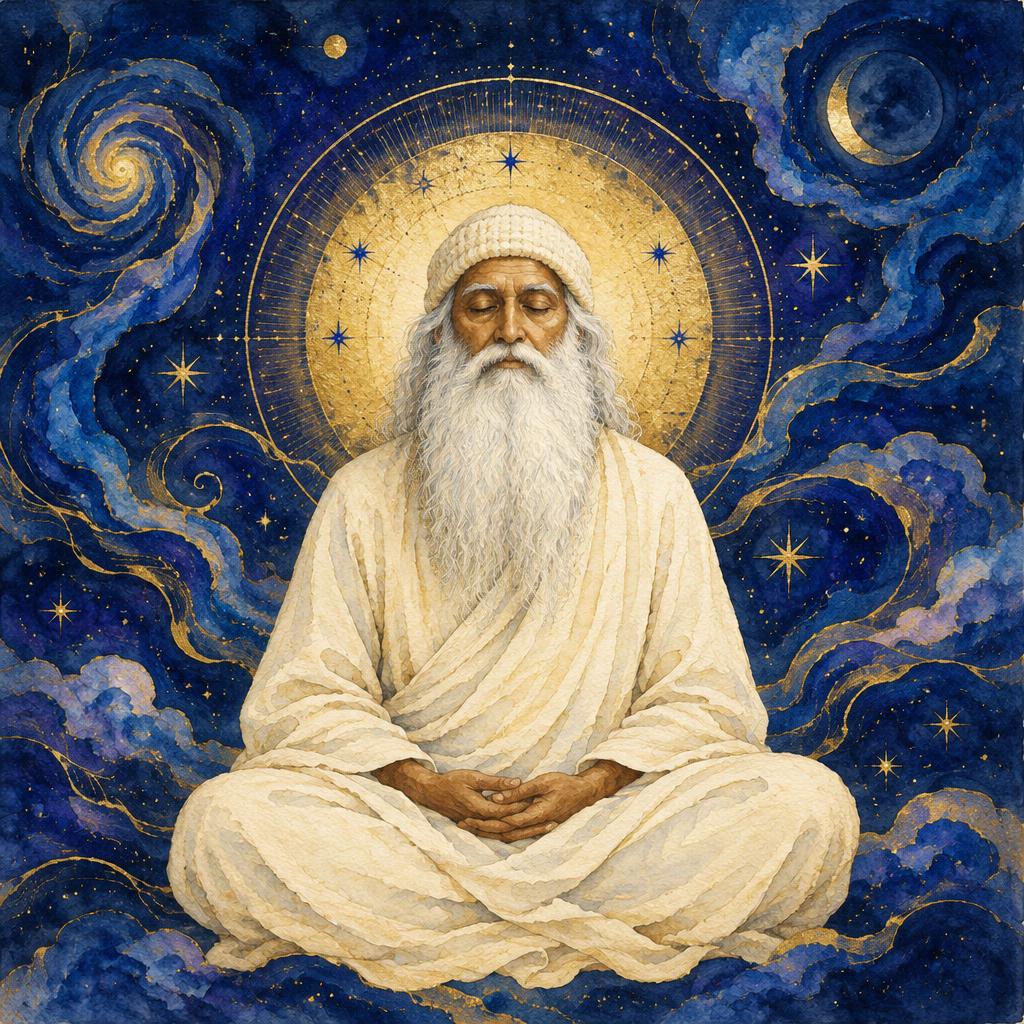
The mystic of celebration
Osho — born Chandra Mohan Jain, later known as Bhagwan Shree Rajneesh — was one of the most widely read spiritual teachers of the twentieth century. A professor of philosophy who became a wandering awakened voice, he spoke for decades on every mystic tradition of the world: Zen and Tantra, Sufism and Hasidism, Lao Tzu and Heraclitus, Kabir and Meister Eckhart.
Meditation is not concentration. It is relaxation, awareness, witnessing.
Meditation as aliveness
His central insight was radical in its simplicity: modern people cannot sit silently first — too much is suppressed. So he devised active meditations like Dynamic Meditation and Kundalini Meditation, using breath, movement, sound, and dance to shake loose what is held, so that silence can arrive on its own. The body was not the obstacle to the sacred; it was the doorway.
The rebel and the Zorba
Osho refused the split between the spiritual and the earthly. His figure of Zorba the Buddha joined the Greek joy of the senses with the Buddha’s stillness: a human being who can dance, love, laugh — and also disappear into meditation. Though his community in Oregon ended in scandal and he remains a contested figure, his books and recorded discourses continue to reach millions of readers around the world.
Experience meditation as celebration in Boston
Boston Mystics gatherings carry the same thread Osho pointed to — meditation that begins in the body, in music, in movement, and ripens into silence. Join a ceremony and feel it directly.
Nearby in the constellation
Kalaripayattu
Kerala, India · Collective / living tradition
The trained moving body becomes the medium. It expands sacred art beyond performance toward disciplined embodied transformation.
ReadAlexander Scriabin (Александр Скрябин)
Russian · mystical composer / esoteric modernism
His unfinished Mysterium envisioned a vast transformative artwork involving music, light/color, scent, movement and environment. It is a near-perfect example of multisensory sacred art as consciousness technology.
ReadAbhinavagupta
Kashmiri Indian · Shaiva Tantra
Central to this project because he links aesthetic experience with expanded consciousness: art can loosen personal emotion into a more universal experience.
Read